Sunday, December 15, 2013

TOW #13 (TEXT): Football: A Waste of Taxpayers’ Money, Why are we subsidizing such a hugely profitable sport? By: Nick Gillespie

In this opinion piece, author, Nick Gillespie, discusses how it is a waste of money for citizens to pay for National Football League (NFL) teams instead of for actual government needs. Gillespie argues that taxpayer money should be spent on actual government problems, and not huge industries like NFL teams. In this article, Gillespie tries to appeal to the reader's logos by using shocking statistics that will make the average taxpayer upset with the government's allotment of money. Nick Gillespie is the editor in chief of Reason.com and the co-author of The Declaration of Independents: How Libertarian Politics Can Fix What's Wrong with America. In the article, Gillespie starts by showing the general public how the NFL is actually affecting their wallets by giving a statistic. He writes, "Over the 30-year life of the project, the public share of costs will come to $678 million." (par.2) This statistic was very effective as it showed the public how exactly football is effecting them. Instead of just talking about the overall market of the NFL, Gillespie targets how the NFL effects the citizens, and therefore makes a greater impact on the reader. The reader, or taxpayer, by reading this statistic, feels upset that their money is going to something as childish as football. Gillespie makes sure to not anger the reader by bashing football, but instead just talks about how people's money can be used elsewhere for a greater impact. This sensitivity to the reader's probable love for football, makes the logical statistics even more impactful as they aren't muddled by the reader's personal opinions. As a fan of the game, I personally think Gillespie did a great job in this because even though I love football, I saw that the amount of money that is being taken from taxes for football is way too much considering all the other problems society has. For this reason, I think Gillespie made his point clear, and effective because even an advocate of the game like myself could see light in his argument. 

Sunday, December 8, 2013

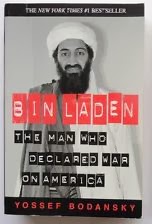
TOW #12 (IRB) Bin Laden: The Man Who Declared War on America by Yossef Bodansky

Through the first part of "Bin Laden: The Man Who Declared War on America" author Yossef Bodansky discusses Bin Laden's early life and how he rose to becoming a terrorist. Essentially Bodansky writes the book as though it is a chronological story of Bin Laden's life, taking the reader through each aspect of his life. Bodansky starts the book by talking about how Bin Laden was originally a promising young engineer, and how he was affluent, but then Bodansky starts to gradually show Bin Laden's change. One of the better things Bodansky does is he doesn't make things seem very cause and effect-like. Since in the real world many things are due to multiple causation as opposed to cause and effect, Bodansky makes sure to paint the whole picture for the reader instead of making the book seem bland and fake. In this first section, Bodansky's purpose is to simply introduce Bin Laden and give background information to the reader while not boring them with sequential writing. One way Bodansky is effective at achieving this purpose is by writing the book as a narrative. Instead of boring the reader with a list of facts about Bin Laden, Bodansky takes the reader through the events as though they are actually happening. This effect makes the reader more engaged in the book and provides for a much deeper understanding than just raw fact. In addition to using a narrative style of writing, Bodansky poses rhetorical questions such as, "What makes these individuals commit themselves to this kind of war?"(Bodansky, 1) These rhetorical, "check-up" questions set the reader up for what is going to come up in the next section. So again, in order to capture the audience's attention, Bodansky alerts them through questions to say that new information is coming up. Personally I think these two strategies make "Bin Laden: The Man Who Declared War on America" a much more connectable and interesting non-fiction piece. As opposed to being a boring non-fiction book, Bodanksy's rhetorical devices engage the reader and make them feel like they are in the time period instead of reading a list of facts.

Tuesday, December 3, 2013

TOW #11 (TEXT): Don’t Like the American Way of Meat? Blame That First Thanksgiving Meal by Maureen Ogle

Maureen Ogle, a historian and author of several books, wrote this opinion piece in order to shed light on the origin of American meat eating habits. While ostensibly seeming that this article is just a history lesson, Ogle uses narrative writing and cause and effect in order to logically show that Thanksgiving may be a day of problems as opposed to thanks. Ogle starts her article by taking the reader back to the days where colonists were first arriving in the New World. Ogle uses a narrative style of writing such that the reader feels like they are learning about the history of the colonists. This basic establishment of information allows for the reader to understand where exactly our meat eating habits come from. Since Ogle is trying to show that Thanksgiving was to blame for our unhealthiness, she takes the reader back to the time period so that they can understand how exactly Thanksgiving affected our unhealthy diets. After establishing this base knowledge, Ogle takes the information and connects it to today's society to show the effect on our diets. This cause and effect as seen by this quote, "meat-centric diets are killing us,"(par. 7) shows how the Thanksgiving meal directly is hurting us today. By using cause and effect, the reader understands that Ogle's argument makes sense and this appeals to the readers logos. All of these rhetorical devices allow Ogle to further solidify her claim that Thanksgiving is the blame of our meat heavy diet. By showing the change over time, using cause and effect, as well as narrative writing, Ogle even makes me feel like Thanksgiving is to blame for our meat heavy diets. I think that Ogle did a good job establishing her point, however I think that she tried to make too far of a stretch by connecting our meat habit to Thanksgiving as opposed to just colonization. I understand she did so because of the holiday, however I think her point would've been more correct, and effective if it was just talking about the connection to the natives as opposed to Thanksgiving as a whole.

Sunday, November 24, 2013

TOW #10 (TEXT): Don’t Go Shopping on Thanksgiving. Just Don’t. By Ellen Galinsky

In this opinion article, author Ellen Galinsky tries to persuade consumers to not shop on Thanksgiving. Galinsky is co-founder and president of the Families and Work Institute, and believes that by shopping on Thanksgiving Day, consumers are making large retailers like Macy's open their shops and thus have their employees work. Galinsky argues that having people work on holidays is detrimental to their well being, as well as their family values. In order to get her point across, Galinsky uses statistics as well as addresses the counter argument to make her point. Galinsky states, "Nearly one-third (32%) of employees report that their work has a primarily negative impact on their lives off the job by draining energy, so they don't have enough left over for their personal and family life."(par. 4). Galinsky uses this data to show readers that even without working on holidays, jobs affect people's family lives. To further her point, Galinsky uses this statistic to say that by taking off on holidays, employee morale is decreased, and there is unhappiness among the employees. These statistics make the consumer aware that morale is a big problem for employees, and that they therefore should not shop on holidays as to avoid promoting holiday working. Galinsky also addresses the other side of the argument by saying that there are some benefits like one and a half times pay for working on holidays, however she quickly refutes this claim saying that family is more important, especially on holidays. Personally I think Galinsky does a great job persuading consumers to not shop on holidays because after reading the article I feel the plight of the employees. Galinsky taught me that family is truly more valuable than money. 

Sunday, November 17, 2013

IRB Intro #2: Bin Laden: The Man Who Declared War on America by Yossef Bodansky

     For the next 4 weeks, I have chosen to read, "Bin Laden: The Man Who Declared War on America" by Yossef Bodansky. This book looks into the rise of Bin Laden, and how he went from a promising engineer into a leader of radical Islam. Bodansky takes a different route into portraying Bin Laden's terrorism as he shows the why's and how's of his decision to do the things he does. Although impossible to understand the true reasons, Bodansky tries to use Bin Laden's past to try and piece together his reason for attacking the US. I stumbled upon this book when I was looking through my dad's bookshelf and decided to chose it because I realized that I truly didn't know much about Bin Laden. I thought to myself that I should know who this man was because he had such an impact on myself as well as the rest of America. Although most of us cheered when we heard about his assassination, I realized that I really had no idea who this man was. Therefore through reading this account of Bin Laden's life, I hope to understand why this man did what he did, as well as who he truly was. Often times non-fiction seems boring, however this book seems really interesting, and I am excited to read it. 


TOW #9 (Visual Text): One Coin for All of Your Cards Advertisement by Coin

   Over the weekend, I was looking at Youtube videos, and this advertisement/infomercial was the top hit on Youtube. Being that Coin is a brand new, innovative product, the video went viral, and now everyone is intrigued by the new technology. However, what truly made this advertisement successful was its mastery of the art of rhetoric. In the advertisement, the company, Coin is trying to promote its all in one credit card. In order to do this, a representative of Coin is doing everyday tasks with his new gadget and showing how simple it works. What Coin is trying to do is to explain what their product is, while showing how easy it is to use, as well as how it helps make life simpler. Coin is targeting all consumers with credit cards, as this is their target market. One of the main rhetorical strategies that Coin uses is the music in the background. The music is very techie as to give an innovative feel to the advertisement. The man's voice and the bee-bops merge well together into something that is really easy for the audience to hear, and understand. Another main part about the music is that once the man swipes his card, or does something innovative, there is a trill in the music. This roll off of the music makes a connection with the viewer, adding to the innovative feel of the device. Another rhetorical strategy that Coin uses in this advertisement is that it makes everything in very simple terms. For example, when trying to describe a portable swiper for an Iphone, the man simply says, "This thing" as to not complicate the product with techie jargon. By making things in simpler terms, almost anyone can understand what the man is saying, and understand the message of the company. Also by being informal, Coin reduces the barrier between the consumer and the creator. Personally, I thought that this advertisement was really good as it caught my attention and has even convinced me to possibly buy one. The Coin commercial used music and simple language to their benefit, and therefore the commercial really had an impact on the audience. 


Tuesday, November 5, 2013

TOW #8 (IRB) Moneyball By Michael Lewis

The second half of Moneyball by Michael Lewis talks more about Beane's successes as a baseball manager, and how exactly he goes on his large win streak. Compared to the beginning, the second half of the book talks more about the managerial aspect to baseball as opposed to the first half's discussion about Beane's life. Lewis does a great job of describing Beane's life as a manager by putting the reader into the action of the clubhouse. Instead of simply just talking about the events, Lewis almost makes it seem as though the reader is experiencing the events for himself or herself. Lewis uses a plethora of rhetorical devices to make simple baseball events into something interesting and connectable. In the second section, Lewis's purpose is to describe the genius of Beane as a GM. In order to do this, Lewis takes the reader through the GM process to show them how difficult it is to manage a team. In the text, Lewis describes many things going on at the same time to show how much Beane has to control. For example, one moment Lewis talks about the pitching issues of the team, and then the next Lewis talks about the batting changes Beane has to make. In showing the overwhelming tasks, Lewis shows that being a GM in baseball is quite a difficult task. Another strategy Lewis uses is he uses allusions to the lives of baseball players. For example, before Beane is about to get a player, Lewis describes the life of the player. After considering the player, Lewis writes, "Chad Bradford grew up the youngest...."(223) to show the backstory of the player. This strategy makes the reader realize that there are many things that go into the consideration of players. Also, as the first part did, Lewis uses direct quotes from actual people in order to make the book seem as real as the actual events. For example, Lewis quotes, "Pitch games that were meaningless" said Moose"(225) By using direct quotes, Lewis makes the story much more believable and relatable. Personally, I think that these strategies make Beane seem like a very accomplished GM, and also make the reader able to connect with what actually happened. I think that because of Lewis's use of rhetorical strategies and devices, I was able to read this book much quicker because it was much more interesting and connectable. Moreover, Lewis's use of rhetorical devices made the story more interesting and connectable